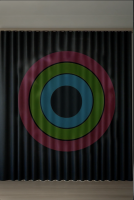
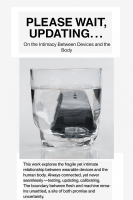
Digital Shackles examines the subtle violence of self-tracking in the digital age — how we have learned to monitor, measure, and discipline ourselves through technology.
I am fully aware of how this constant monitoring feeds my anxiety and obsessive tendencies, yet removing the device triggers a loss of safety and control. This contradiction — between data-driven security and emotional confinement — is where the work begins.
The project is informed by Michel Foucault’s theory of the docile body in Discipline and Punish (1975), where power becomes internalized — the subject both watches and punishes itself. In the context of today’s health apps, digital rings, and smart earbuds that can now monitor heart rate, the panopticon has become intimate, wearable, even comforting. Do we really need so many devices to measure our hearts?
Digital Shackles also draws on Kate Crawford’s idea of AI as “embodied and ecological” — a system made of natural resources, human labor, and energy. The work links the inner economy of self-tracking with the outer material networks that sustain it, revealing how our pursuit of optimization mirrors the extractive logic of the digital world.
数字枷锁”构想深刻响应了米歇尔·福柯(Michel Foucault)在《规训与惩罚》中提出的“驯服的身体”(Docile Body)理论。 在今天,健康APP、数字戒指和智能耳机构成了一个“亲密的环形监狱”。权力不再是外部的暴力,而是被内化为自我的监测与纪律。个体既是监视者,也是被监视的对象,通过不断产生的数据进行自我惩罚和自我优化。这种持续的监控提供了一种“数据化安全感”,移除设备引发的失控感揭示了这种权力网络已经深度嵌入了我们的身体自主权中。
凯特·克劳福德(Kate Crawford)挑战了“AI 是云端抽象算法”的迷思,强调其具有极强的物质性。 每一个监测心率的简单指令背后,都连接着锂矿开采、海量水资源消耗和劳动力的榨取。 个体对自己身体数据的“最优化”追求,实际上镜像了数字工业对自然界资源的“榨取逻辑”。数字自我被优化的过程,也是自然资源被消耗的过程。